
Selecting a wedding cake goes beyond choosing flavors or design. It shapes a dessert experience that supports the overall tone of the celebration. As part of the reception, the cake should feel cohesive with the design, timeline, and guest experience rather than like an afterthought.
Approaching your cake design decisions with clarity early in the planning process helps couples make confident decisions and ensures the final result feels thoughtful, elevated, and seamless.
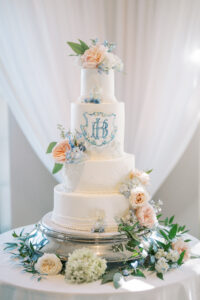
Monogrammed tiered wedding cake with floral accents styled on a dessert table
Wedding Cake Selection Begins With the Overall Vision
Before discussing flavors or décor, it’s important to understand how the cake fits into the broader wedding design. A formal ballroom celebration may call for a more traditional tiered cake, while a modern or outdoor wedding may lean toward a refined, minimal approach.
Choosing a wedding cake should support the aesthetic you’re creating—not compete with it. When design decisions are aligned from the beginning, the cake becomes a natural extension of the celebration rather than a standalone element.
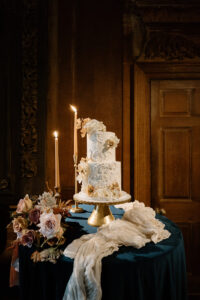
elegant wedding cake
Wedding Cake Selection: Flavors and Textures
Flavor is where personal preference takes center stage. While visual design often draws attention first, guest experience is heavily influenced by taste and texture.
When selecting flavors, consider:
-
A balance between classic and seasonal options
-
Textures that hold well throughout the reception
-
Pairings that complement the menu rather than overwhelm it
A thoughtful wedding cake selection prioritizes flavors that feel intentional, accessible, and well-executed.
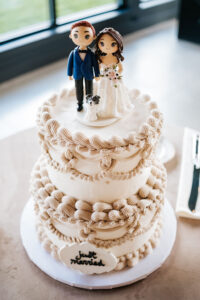
Vintage-inspired wedding cake with piped frosting details and classic tiered design
Planning Your Wedding Cake Tasting
Cake tastings are best approached with preparation. Arriving with clarity around design inspiration, guest count, and service style allows the tasting to be productive and focused.
During this stage of wedding cake selection, it’s helpful to evaluate:
-
Flavor consistency
-
Frosting-to-cake ratio
-
Structural integrity for your venue and timeline
Resources like Brides offer helpful overviews of cake styles and trends that can complement planner-led guidance during this phase of the process.
Wedding Cake Selection and Reception Flow
Cake service should align with the pacing of the reception. Whether the cake is cut early, later in the evening, or served behind the scenes, these decisions affect both guest experience and photography timing.
When planning your wedding cake selection, consider how the cake moment fits into the overall reception flow—similar to how other elements contribute to a well-paced celebration. You can explore more about this approach in our guide to creating a memorable guest experience.
Budget Considerations for Wedding Cake Selection
Budget plays an important role in choosing a wedding cake, but cost is influenced by more than size alone. Factors such as intricate detailing, specialty ingredients, and delivery logistics all contribute to pricing.
Rather than reducing the cake to a single line item, consider how it fits into your overall design investment. A well-executed cake, even with a simpler design, often has a greater impact than something overly elaborate without cohesion.
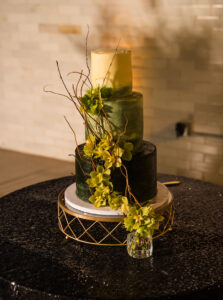
Working With Your Baker During Wedding Cake Selection
Clear communication with your baker ensures expectations are aligned from the start. Sharing inspiration images, venue details, and service plans helps the baker create a cake that performs well visually and logistically.
Coordinating your cake details with your photography timeline is also important. Learn more about how professional documentation supports these moments in our guide to choosing a luxury wedding photographer.
Your cake design decision is most successful when it’s treated as part of the overall planning strategy rather than an isolated decision. When flavor, design, timing, and guest experience are considered together, the result feels intentional and elevated.
A thoughtful approach ensures your cake enhances the celebration—both visually and experientially—while fitting seamlessly into the flow of the wedding day.

